

Best tangle teezer for thick hair—if you have dense, unruly strands, you probably know that most brushes just can’t get through. This post cuts through the noise: here’s how to pick the one detangler that actually works for genuinely thick hair, based on tool tech, cleaning, long-term value, and real pain points.
Key Takeaways
- For genuinely thick or coily hair, not all “thick hair brushes” are effective—bristle rigidity, length, and grip matter just as much as the name on the handle.
- Most breakage and frustration comes down to using the wrong tool on dry hair or without slip; technique is as important as the product you pick.
- Tangle Teezer Thick & Curly outperforms most paddle brushes for detangling with less pain, but wide tooth combs still win for easiest cleaning, while handled brushes help if you lose grip.
- Quick verdict—best pick by use case
- How to pick and use a detangler for thick hair
- Pitfalls, pain points & the 2026 detangler comparison
- Conclusion
- FAQ
Quick verdict—best pick by use case
If you want no-nonsense answers, here’s the best detangling tool for thick hair by scenario (using 2024–2026 price and feature data):
- Fast detangler (wet/damp, max pain-free): Tangle Teezer Thick & Curly (detangling brush for thick hair, ~$13)
- Best palm detangler: Tangle Teezer Naturally Curly (firmer teeth, palm fit)
- Best handled detangler: Wet Brush Thick Hair Detangler (~$12; longer, more flexible bristles—best for less tension on scalp)
- Best budget pick: Wide tooth comb (~$8; unbeatable for cleaning/styling, especially for preserving curl pattern)
- Best comb for wet styling: Ouidad Double Detangler (~$28; rigid, extra-long teeth for serious density)
In 2024–2026, budget detanglers sit at $8–15, midrange tools at $15–30, and salon/“luxury” brushes at $40–100+ [1].
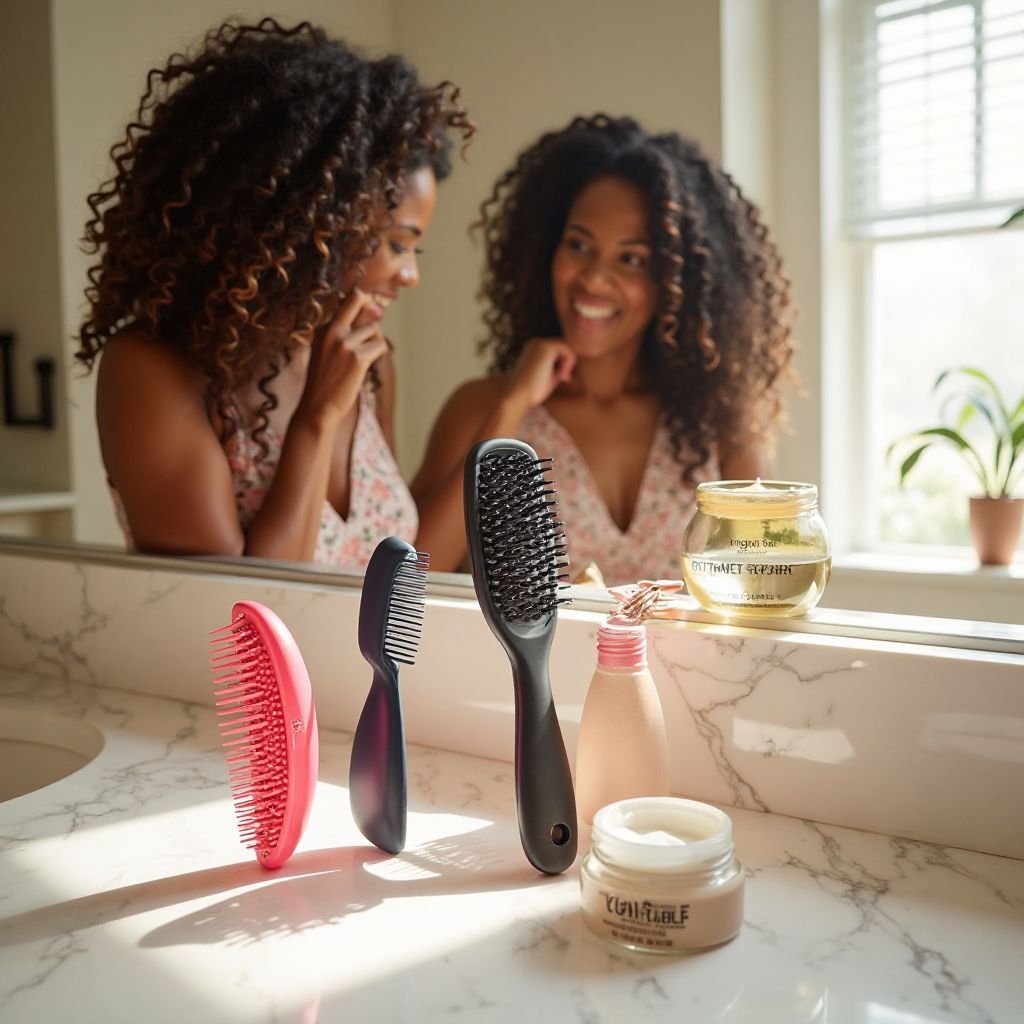
Tool does matter: short, soft pins (like standard Wet Brush) simply can’t reach the roots or heavy “knots” in dense 3B–4C or thick straight hair. But technique—sectioning, working wet and upward from the ends—matters just as much, and no head-to-head studies show one detangler is always best.
See our best hair clips for thick hair guide if you also struggle to section dense hair during detangling.
How to pick and use a detangler for thick hair
Want fewer snags and less frustration? Here’s a direct, evidence-driven process for choosing and using the best detangling brush 2026 style:
- Test your hair: Is it high density (lots of hairs per cm2), coarse strand, or both?
- Pick your preferred grip: Palm style (e.g., Tangle Teezer) for leverage, or a handled detangler for more control if your hands get slippery.
- Look for long, firm (not stiff/sharp) bristles or multi-level teeth; skip ultra-flexible nylon pins unless your hair is fine-medium and just thick in volume.
- Prep your hair: Always work with wet/conditioned hair. Slip is not optional—use a leave-in or conditioner every time you detangle.
- Section hair in small parts, especially if you have dense type 3C–4C, long/coarse straight, or layered thick hair. Start detangling from the ends upward.
- After use, remove shed hair with a tail comb or fingers. Rinse brush and occasionally cleanse with shampoo to prevent product buildup.
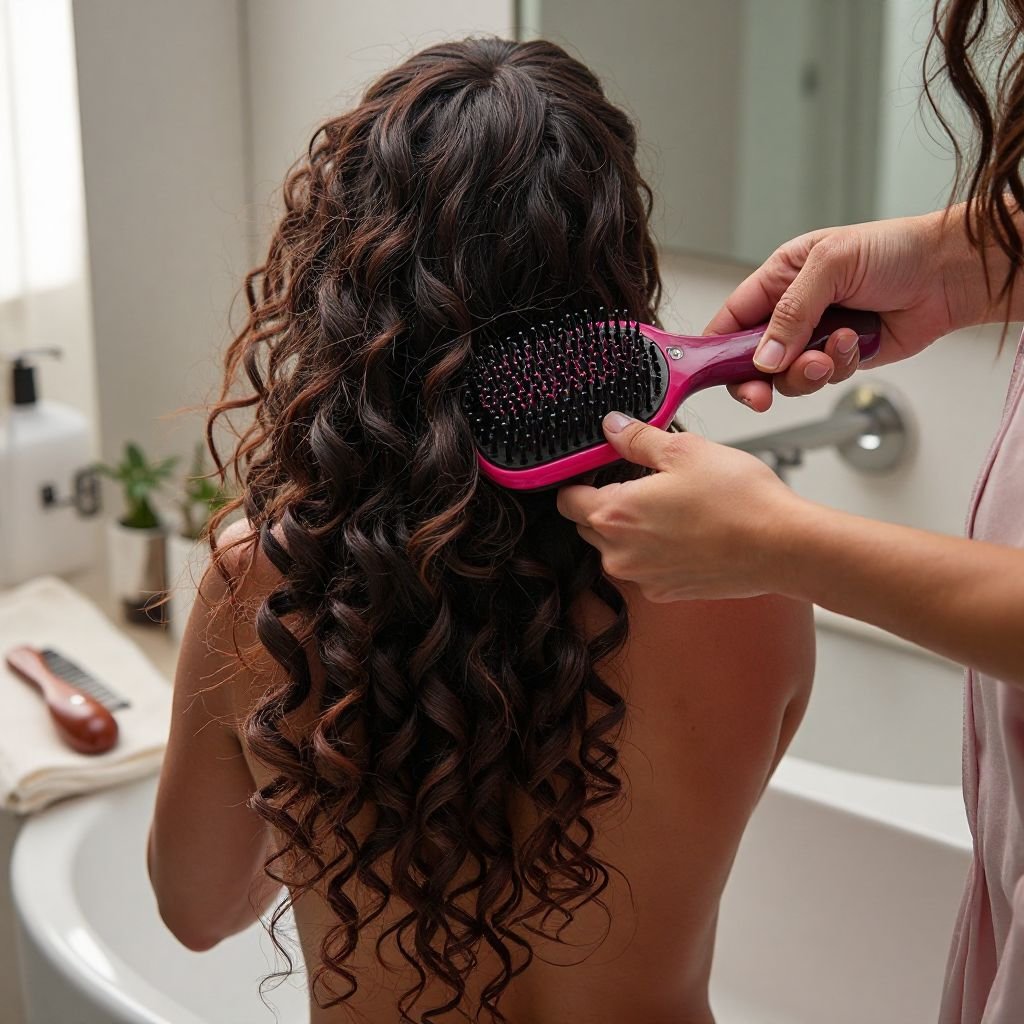
Not sure about soft vs rigid bristles? If your brush’s pins bend easily when pushing through hair, they’re likely too soft for genuine thick/high-density hair. Look for descriptions like “extra rigid,” “firm-flex,” or “long teeth” on packaging.
Bonus: If you use heavy products or co-wash, avoid dense pad-style brushes—pick a molded plastic brush or comb for easiest cleaning.
Want more on scalp protection? See our best satin bonnet for natural hair breakdown.
Pitfalls, pain points & the 2026 detangler comparison
Research and user reviews highlight what goes wrong—and how to avoid it.
- Bristles too short/soft: Standard Wet Brush pins often flop in serious density. Tangle Teezer Thick & Curly’s teeth are firmer, but if you only brush large sections, even the “best” brush can leave roots tangled.
- Difficult cleaning: Padded detanglers trap shed hair and product. Wide tooth combs or solid-molded brushes like Tangle Teezer are much easier to rinse and clean.
- Palm tools slipping: Palm detanglers (e.g., Tangle Teezer) can be hard to grip with wet/hydrated hands—if you regularly deep condition, handled brushes provide better control.
- Breakage, frizz, or “pushes” tangles: Using the wrong rigidity brush can cause bristles to fold (Wet Brush) or create surface frizz (cheap “detangling” paddle brushes). Pair the right tool with slip and sectioning to avoid this.
- Durability: Nylon pins (Wet Brush) may shed or bend over time; molded plastic bristles (Tangle Teezer, some “knot-free” brushes) tend to last longer but always check for cracked teeth.
| Tool | Bristle Tech | Best For | Price Band (2026) | Cleaning / Durability |
|---|---|---|---|---|
| Tangle Teezer Thick & Curly | Firm-flex 2-tier molded plastic teeth | Dense curls, thick straight, 3B–4C hair | $12–15 | Easy to rinse; shed hair can stick; lasts long |
| Wet Brush Thick Hair Detangler | Flexible IntelliFlex nylon pins | Less dense thick/long hair (gentler on scalp) | $10–15 | Pad traps hair/product; pins may shed over time |
| Denman Tangle Tamer Ultra / Gimme Thick Hair | Long/rigid nylon pins | Severely tangled, dense/kinky hair | $18–28 | Handled grip; can last years if not dropped |
| Wide Tooth Comb | Rigid, widely spaced teeth | Gentle detangling/wet styling, preserving curls | $8–15 | Very easy to clean; nearly indestructible |
| Salon “Knot-Free” Brushes | Molded/rigid, often multi-length | Mixed density, high-slip, rapid detangling | $15–30 | Molded = easiest cleaning; robust build |
Market trends show rigid and multi-level bristles are dominating the detangling brush for thick hair segment, while demand keeps pushing brands to release more “Thick & Curly” variants [1]. But beware: no head-to-head RCTs rank tools in thick hair, so pick based on your strand thickness, grip needs, and styling routine—not just reviews.
For scalp health, cleaning routines matter too. Product buildup is a breeding ground for scalp issues. Clean your brush or comb weekly with mild shampoo if you use leave-ins, and always fully dry before storage. For more routine tips, check our hair oil for frizzy hair guide.

Curious about how all this fits into a holistic healthy hair routine? Explore our evidence-backed hair towel for curly hair and best silk pillowcase for hair growth roundups for friction-reducing add-ons.
Want deep-dive data? The global detangling brush segment is over $4.2B in 2024 and rising, but no 2026-specific sales data exists for “thick-hair brushes” alone [1][4][5].
Conclusion
Choosing the best tangle teezer for thick hair means matching the tool to your strand density, brushing technique, and cleaning tolerance. No brush is perfect for everyone, but picking one with long, firm bristles and a grip that actually stays put will reduce pain, breakage, and wasted dollars. Want to level up your thick hair routine? Dive into our real product review hub for more evidence-based beauty picks.
Ready for smoother, easier detangling? Test your density, use plenty of slip, and invest in a brush you’ll stick with—your hair (and scalp) will thank you.
FAQ
Is a Tangle Teezer safe for thick or fragile hair?
Yes, if used gently on wet or conditioned hair. Tangle Teezer Thick & Curly is designed for high-density, coily, or thick straight hair. Start from your ends and work up to avoid breakage.
Should I choose a palm-style or handled detangler?
Palm detanglers (like Tangle Teezer Thick & Curly) offer more direct pressure and leverage but can be slippery with wet hands. Handled types (Wet Brush Thick Hair, Denman) are better if you need extra grip or detangle in the shower.
How often should I clean my detangling brush?
Rinse bristles after every use; use mild shampoo weekly if you use heavy oils or leave-in products. Molded brushes and wide tooth combs are the easiest to keep hygienic.
Can a wide tooth comb replace a detangling brush for thick hair?
For light-to-moderate tangles or everyday curl preservation, yes. For severe tangling after wash days, most users need both: comb for initial pass-through, then a firm-bristle detangler to finish.
Do Tangle Teezer or Wet Brush work on 4C or ultra-dense hair?
Tangle Teezer Thick & Curly works well when hair is fully saturated with conditioner and sectioned. Wet Brush pins may be too soft for true 4C density—choose a firmer-bristled detangler or wide tooth comb for best results.