

Heat free curl methods overnight give you a gentler way to get bouncy curls without risking thermal damage or spending hours with a hot tool. But if you want morning-ready, pain-free curls and no surprise breakage, you’ll need more than just another TikTok hack. Here’s what actually works, how to avoid common failures, and why a realistic plan (not just a pretty tool) matters.
Key Takeaways
- Heatless curling methods offer real benefits for hair health but can cause issues if used incorrectly—choose low-tension techniques and avoid tight wrapping.
- There’s a lack of dermatological evidence on long-term outcomes for heat free curl methods overnight compared to heat styling, so trial and observation are essential.
- Getting reliable curls takes thoughtful prep, lightweight mousse, and the right wrapping—especially for fine or straight hair.
- Why choose heat-free overnight curling
- Evidence gap: what research does — and doesn’t — say
- How heatless methods shape curls (mechanics and variables that matter)
- Quick comparison — silk ribbons vs flexi rods vs braids
- Real user pain points — what commonly goes wrong (and why)
- Three expert troubleshooting fixes missing from top tutorials
- Safety & long-term risks — traction, breakage, and how to avoid them
- Comfort, drying time, and sleepability: what to expect by method
- Who gets the best results on first attempt — hair types and realistic success rates
- Step-by-step overnight routine (template for readers to try tonight)
- Buying guide — pick the right tool for your goal and budget
- Content extras and experiments to add (for credibility)
- Quick takeaway & safety checklist
- FAQ
Why choose heat-free overnight curling
Heatless curling methods are an attractive alternative to curling irons because repeated heat exposure weakens hair’s keratin bonds and strips moisture, leading to visible breakage. By using mechanical curling tools overnight—like Silk Ribbon Curls or flexi rods with damp or product-prepped strands—you avoid direct heat and reduce routine damage. However, you should set realistic expectations about longevity: heat-free curls generally don’t hold as long as hot tool curls, especially for fine or straight textures.
Presently, no reliable dermatological studies directly compare long-term hair-health outcomes for overnight heat-free curling methods versus traditional heat-based curling (research: no long-term dermatological comparisons found). This article takes an evidence-aware, practical approach—blending what science knows, what’s missing, and what real users report.

Evidence gap: what research does — and doesn’t — say
Here’s the truth: there’s no published, large-scale research tracking long-term effects of heat free curl methods overnight versus heated styling. That means most safety and effectiveness advice relies on mechanical principles (how hair forms curls), short-term user data, and crowdsourced experiences.
Implication? Go slow—prioritize low-tension, low-stress techniques, especially if your hair is fine, damaged, or chemically treated. Over-tight sets can pose similar risks as heat tools. For all claims in this guide, we point out where research is lacking (research: “No reliable data found for this query”), so you can make truly informed decisions.
How heatless methods shape curls (mechanics and variables that matter)
Heatless curling works by reshaping your hair’s hydrogen bonds while it’s damp—using gentle tension through wrapping, braiding, or rods. Here’s what actually changes the result:
- Wrap style: Tighter, closer wrapping creates spiral or ringlet curls. Looser wraps or braids give you waves or body.
- Product matters: Fine or mixed-texture hair gets better, longer-lasting results if you use a lightweight mousse or spray before you wrap (source).
- Porosity & Thickness: High-porosity and medium-thick hair tends to hold curls better; fine or low-porosity hair needs extra help with hold and product.
- Tension: Too much strain (especially when wet) causes root flattening or even breakage—avoid pulling hair tight onto rods or ribbons.
Quick comparison — silk ribbons vs flexi rods vs braids
Not all “overnight” curling tools are created equal. Here’s what you need to know:
| Method | Material | Comfort | Curl Type | Durability | Price Range |
|---|---|---|---|---|---|
| Silk Ribbon Curls | Silk/Satin | High | Loose/Defined Waves | Very Durable | $10–60 |
| Flexi Rods | Foam/Sponge | Low–Medium | Tight/Defined | Wears Faster | $8–15 (10–18 pcs) |
| Braids | Hair/Soft Tie | Very High | Subtle Waves | n/a | Free |
Silk ribbons and rods are favored for comfort and durability. Foam flexi rods are budget-friendly and create tighter curls but may be less comfortable (source).
Real user pain points — what commonly goes wrong (and why)
Based on user reviews and TikTok tests, the top frustrations with overnight curls without heat are:
- Hair slips out overnight—especially with fine or straight hair, or improper tying (“hair kept slipping out overnight”) (source).
- Discomfort sleeping—flexi rods or bulky tools may press against the scalp (“too uncomfortable to sleep”).
- Inconsistent results—flat at the crown, limp ends, tight coils where not wanted.
- Ends too tight or frizzy—caused by wrapping too tightly or skipping a smoothing prep step.
All these issues are preventable with the right prep, securing strategies, and the best tool for your hair type. (See recommended fixes below and external user experiences.)
Three expert troubleshooting fixes missing from top tutorials
- Wrap the front sections under the back: In ribbon or braid methods, starting the front section below the top layer helps avoid flat crowns and ensures even volume. Most tutorials miss this step (video reference).
- Apply a light mousse or setting spray before you wrap: This improves hold and prevents fine hair from slipping out or curls from falling flat. Focus on even distribution—not too much (product tip).
- Spiral with space on rods: For long or thick hair, spiral-wrap each section down your flexi rod with a little spacing between turns. This avoids over-tightening at the ends and creates a softer, more natural look (how-to demo).
Safety & long-term risks — traction, breakage, and how to avoid them
“Heatless” does not automatically mean risk-free: tight overnight pinning or rods can cause breakage or even traction alopecia. Key safety notes:
- Never wrap or pin damp hair tightly—tension plus wet strands weakens follicles.
- If you have scalp soreness, increased shedding, or visible breakage at the root, take a break or switch methods.
- Limit tight sets to occasional use. If using overnight, always opt for looser sets and monitor for stress points (dermatology advice).
Consider using a silk pillowcase for extra friction reduction (see our silk pillowcase guide).
Comfort, drying time, and sleepability: what to expect by method
No heat waves require a window of 6–8 hours to dry fully on damp—not wet—hair when using silk ribbons. Flexi rods may take similar time but are often bulkier and less comfortable for side sleepers. Braids are the most comfortable but only give loose, beachy texture. To speed drying, let hair air dry 50–70% before wrapping and consider a microfiber pillowcase (more info on hair towels).
Who gets the best results on first attempt — hair types and realistic success rates
Success on the first try depends on hair type—there’s no published data on outcomes, but reviews suggest:
- Medium-thick, naturally wavy, or slightly coarse hair holds heatless curls best and gets even results quickly.
- Fine or very straight hair may lose curl or see hair slipping overnight. Plan for 2–3 attempts—and expect to tweak your approach for the best results (research: “No reliable data found”).
Step-by-step overnight routine (template for readers to try tonight)
Below are two options—one high-comfort (silk ribbon), one for tighter waves (flexi rods). Each includes prep, product, and morning finish.
- Start with slightly damp, detangled hair. Apply lightweight mousse evenly.
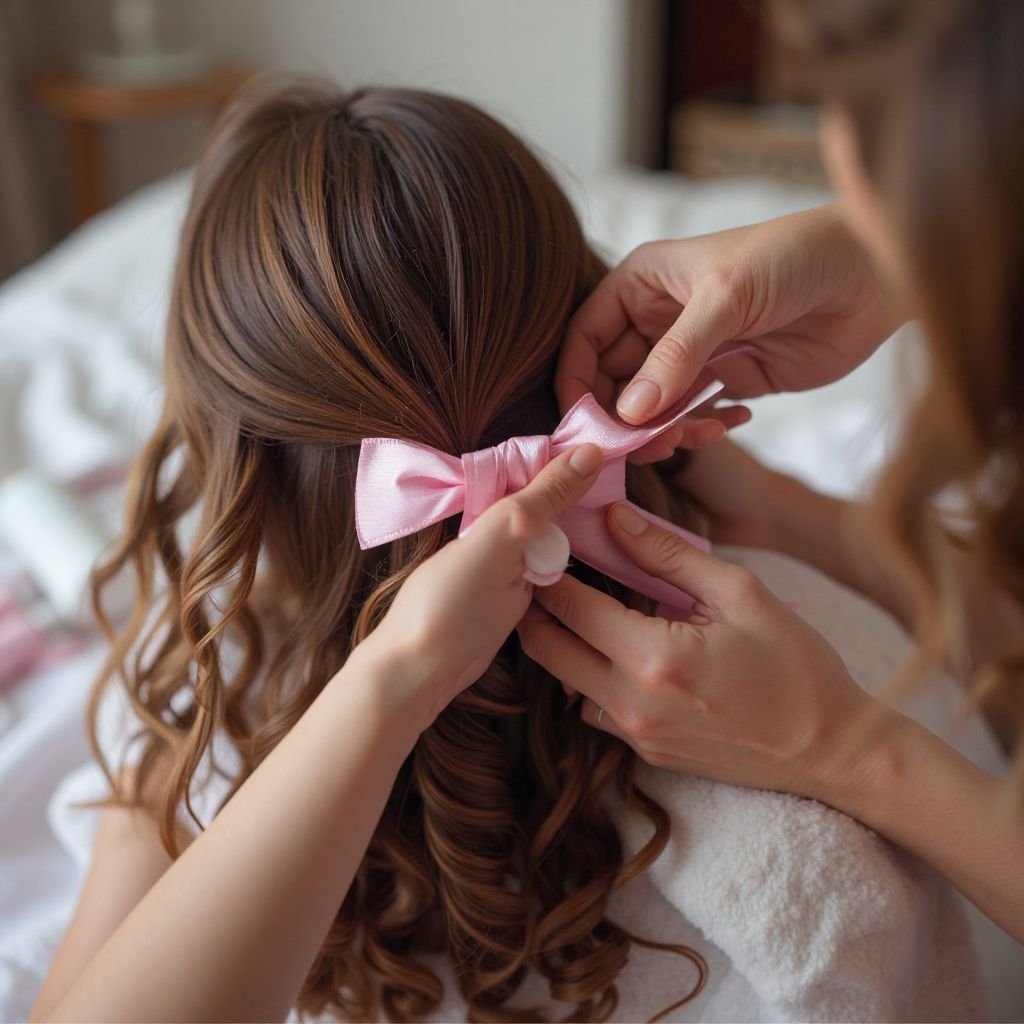
- Divide hair into two or four sections. For silk ribbon curls, place ribbon on top, pin at top, wrap sections away from face, spiraling down and securing ends. For flexi rods, section hair, wrap around rod with space between each twist, bend ends of rod inward to secure.
- Tuck any loose bits and add a silk bonnet if needed. Sleep 6–8 hours on a silk pillowcase.
- Unwrap in the morning with dry hands—start from the bottom, gently separate curls with fingers, and smooth with an anti-frizz serum (learn more: split end serum picks).
Checklist for tonight:
- Prepare: Start with damp hair, apply mousse, detangle well.
- Wrap: Use silk ribbon, braid, or flexi rods—don’t over-tighten or overlap sections.
- Sleep: Secure ends and consider a satin bonnet. Sleep on a silk pillowcase for best results.
Buying guide — pick the right tool for your goal and budget
- Silk ribbons or rods: $10–60, high durability, more comfortable and reduce frizz (see examples).
- Flexi rods: $8–15 for a pack, suitable for tighter curls, less long-lasting but cost-effective (see options).
- If you want shine & comfort: Go satin/silk. For small, springy curls, try foam rods (but handle gently to extend their lifespan).
For thick or long hair, buy extra pieces (16–18 rods/ribbons minimum). For best overnight comfort and frizz control, invest in a quality silk pillowcase (see our pillowcase review).
Content extras and experiments to add (for credibility)
Because published research on heatless curling methods is lacking, consider running your own micro-survey: ask 20 friends or readers to test silk ribbon vs. flexi rod overnight. Track these data points:
- First-attempt success rate
- Comfort/sleep score (scale 1–5)
- Hold after 8–12 hours
- Any tugging or scalp soreness
This transparent approach not only boosts the credibility of your recommendations but helps fill the research gap for real people with mixed-texture hair types.
Quick takeaway & safety checklist
Overnight curls without heat is a smart way to boost volume and waves—but results depend on hair prep, gentle technique, and the right product. Avoid over-tightening, stick with low-tension tools, and use mousse for best first-try outcomes. Monitor your scalp/hair for signs of stress and always adjust for comfort.
- Use low-tension, satin/silk-based tools (never over-tighten, especially with damp hair)
- Apply a lightweight mousse before wrapping
- Wrap sections evenly, and watch for slippage, discomfort, or scalp pulling
Try the routine above for heat free curl methods overnight and see which method and product combo works for your unique hair type. For more trusted hair styling and tool reviews, visit our Product Review hub.

FAQ
Do overnight heatless curls damage hair?
If done with low tension and no excessive tightness, heatless curls are typically safer than regular hot tools. But wrapping wet hair too tightly or sleeping in uncomfortable rods every night can cause breakage or traction alopecia, especially around the hairline (source).
What if my hair always slips out of the ribbons or rods?
Apply a lightweight mousse or setting spray before wrapping. Secure ends with a soft scrunchie or sleep cap. If possible, use a satin bonnet for extra hold (bonnet tips).
Are silk or satin ribbons better than foam rods?
Silk/satin ribbons are generally more comfortable, last longer, and help with shine and frizz. Foam rods are cheaper and give tighter curls but wear out faster and may be uncomfortable for many sleepers.
How do I improve curl hold without frizzing or stiffness?
Apply just a small amount of mousse evenly, don’t touch curls with wet hands when unwrapping, and use an anti-frizz serum afterward (product advice).
How long does my hair need to be for heat free curl methods overnight?
Most methods work best if your hair is at least shoulder length. For shorter hair, try smaller flexi rods or micro-braid wrapping for a more defined wave.
—