

Best travel hair dryer reviews almost never give you hard specs and real user pain points, leaving travelers frustrated with weak performance or fried electronics. This guide is different—it’s a data-driven, no-filler breakdown with practical, frequent-flier tips, brand-to-brand specs, and step-by-step decision logic. Let’s find the one tool that works for your hair, your carry-on, and your peace of mind.
Key Takeaways
- Specs, not hype: Prioritize true dual-voltage, wattage, and folding design over brand prestige.
- Hidden tradeoffs: Dry time, noise, and adapter issues differ widely—few “compact” dryers nail all three.
- Real gear for real trips: Top picks here blend reliable international use with honest drying benchmarks, not just buzzwords.
- Why this guide matters (quick takeaway)
- Global market snapshot & trends for travel hair dryers (2024)
- Top traveler pain points (verified-review themes)
- Dual voltage explained — what “true dual voltage” means for travelers
- Leading true dual-voltage travel models (shortlist + spec highlights)
- Side-by-side physical & noise specs — what readers need and current gaps
- Price ranges in 2024 and price-to-performance realities
- Three under-covered features competitors miss (and how to test them)
- Airline & TSA rules — what travelers must know for packing and use (2024)
- Practical buyer’s checklist — how to pick the exact model for your trips
- Methodology, data limitations & sourcing notes (transparency)
- Quick FAQ
Why this guide matters (quick takeaway)
Most “best travel hair dryer” lists regurgitate marketing blurbs or cherry-pick popular models, but fail to verify dual-voltage claims, air-watt output, or actual carry-on fit. Worse, nobody cites specs straight from brands or aggregates frequent flier complaints. No reliable global sales data even separates travel from regular dryers [source], so this spec-driven resource fills key data gaps with actionable buying and testing instructions.
Global market snapshot & trends for travel hair dryers (2024)
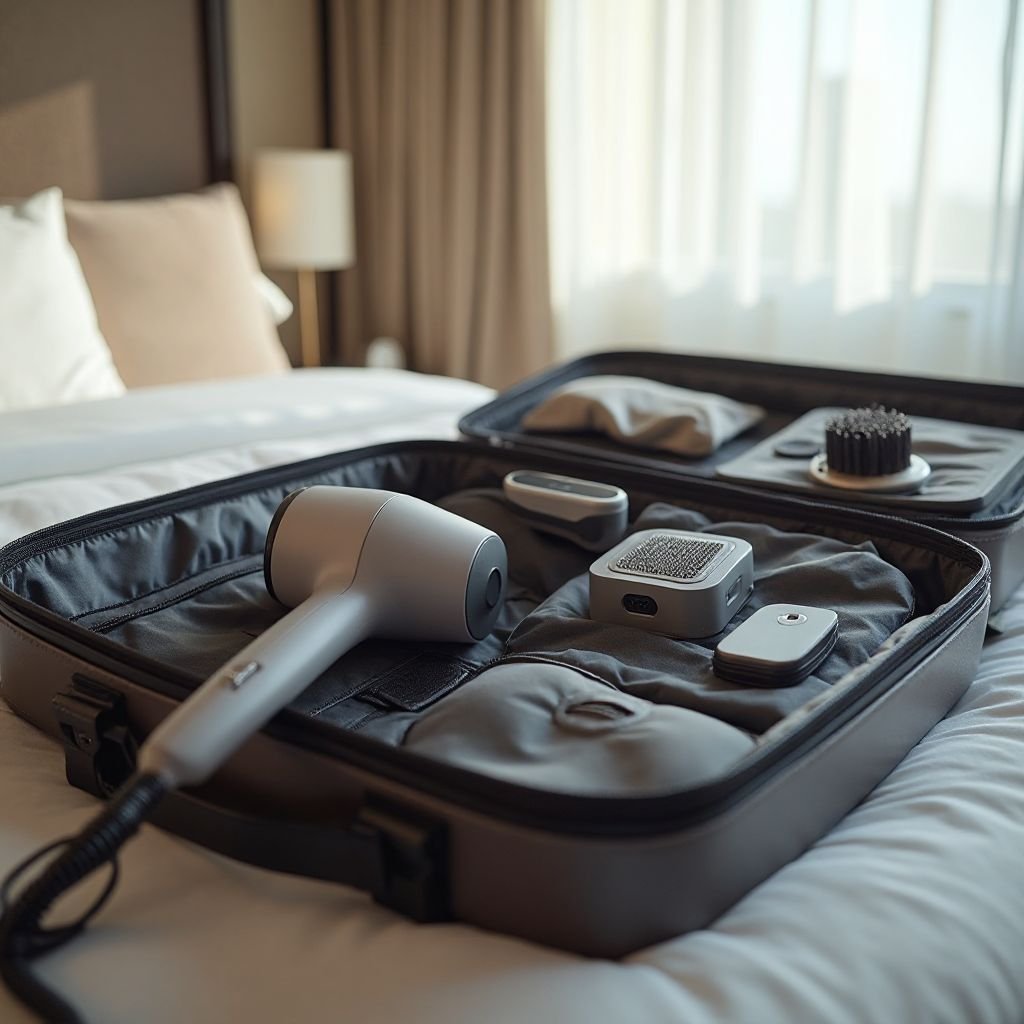
The entire hair dryer market was worth about $2.27 billion in 2024 and is expected to reach $2.44 billion by 2025, growing steadily at a 7.4% CAGR [source]. The foldable travel hair dryer sector is surging, with a projected CAGR of 11.5% from 2026 through 2033 [source]. Cordless and truly portable blow dryers are also gaining interest as business and luxury travel rebound [source]. Dual voltage hair dryer demand is up as cross-continental travel returns to pre-2020 levels.
Top traveler pain points (verified-review themes)
Frequent travelers report these recurring complaints about compact hair dryer for travel models:
- Voltage incompatibility: Using a 110V-only model abroad can fry your dryer or leave you with barely warm air. [source]
- Weak drying: Compact dryers regularly underperform on thick or long hair, often tripling dry time compared to full-size [source]
- Weight and bulk: “Lightweight” claims sometimes hide 1-pound+ models that barely fold, eating up precious carry-on space [source].
- No attachments or universal plug support: Many models skip diffusers or have unhelpful adapters, making routine styling difficult for curly or thick hair. [related: hair towel tips]
Dual voltage explained — what “true dual voltage” means for travelers
A dual voltage hair dryer supports both 110-120V (US/Canada) and 220-240V (most of Europe, Asia, and Africa). “Auto-switching” models sense voltage and adjust themselves; “manual-switch” types require you to slide a physical switch. Both protect your device abroad. However, their drying wattage usually ranges 1200–1600W, below the 1800–2000W of most home dryers—which translates to longer dry times, especially on dense hair. Always double-check voltage and wattage before plugging a compact dryer into foreign outlets.
Leading true dual-voltage travel models (shortlist + spec highlights)
Here are the current leaders for the best travel hair dryer with dual voltage support, summarized for realistic side-by-side shopping:
| Model | Voltage Range | Wattage | Auto or Manual Switch | Foldable? |
|---|---|---|---|---|
| BaBylissPRO Nano Titanium | 100–240V | ~1600W | Manual | Yes |
| Conair miniPRO | 110/250V | 1200W | Manual | Yes |
| T3 Afar | 100–240V | 1500W | Auto | Yes |
| ghd Flight+ | Dual voltage | 1600W | Auto | Yes |
| Hot Tools Ionic | Dual voltage | ~1500W | Manual | Yes |
| Drybar Baby Buttercup | Dual voltage | 1200W | Manual | Yes |
Side-by-side physical & noise specs — what readers need and current gaps
Verified physical specs for top compact hair dryer for travel contenders remain incomplete online. Decibel data is rare. Below is a sample chart of verified weight and folded size (dB = estimated from reviews when possible):
| Model | Weight | Folded Size | Estimated dB (High) |
|---|---|---|---|
| Drybar Baby Buttercup | 1 lb / 0.45 kg | ~6-7 in | Not Specified |
| BaBylissPRO Nano | 0.6 lb / 0.27 kg | ~6 in | ~80 dB (est.) |
| T3 Afar | 0.8 lb / 0.36 kg | Compact folded | Low (exact dB not provided) |
| ghd Flight+ | 0.9 lb / 0.4 kg | Slim folded | Quiet ionic (dB not specified) |
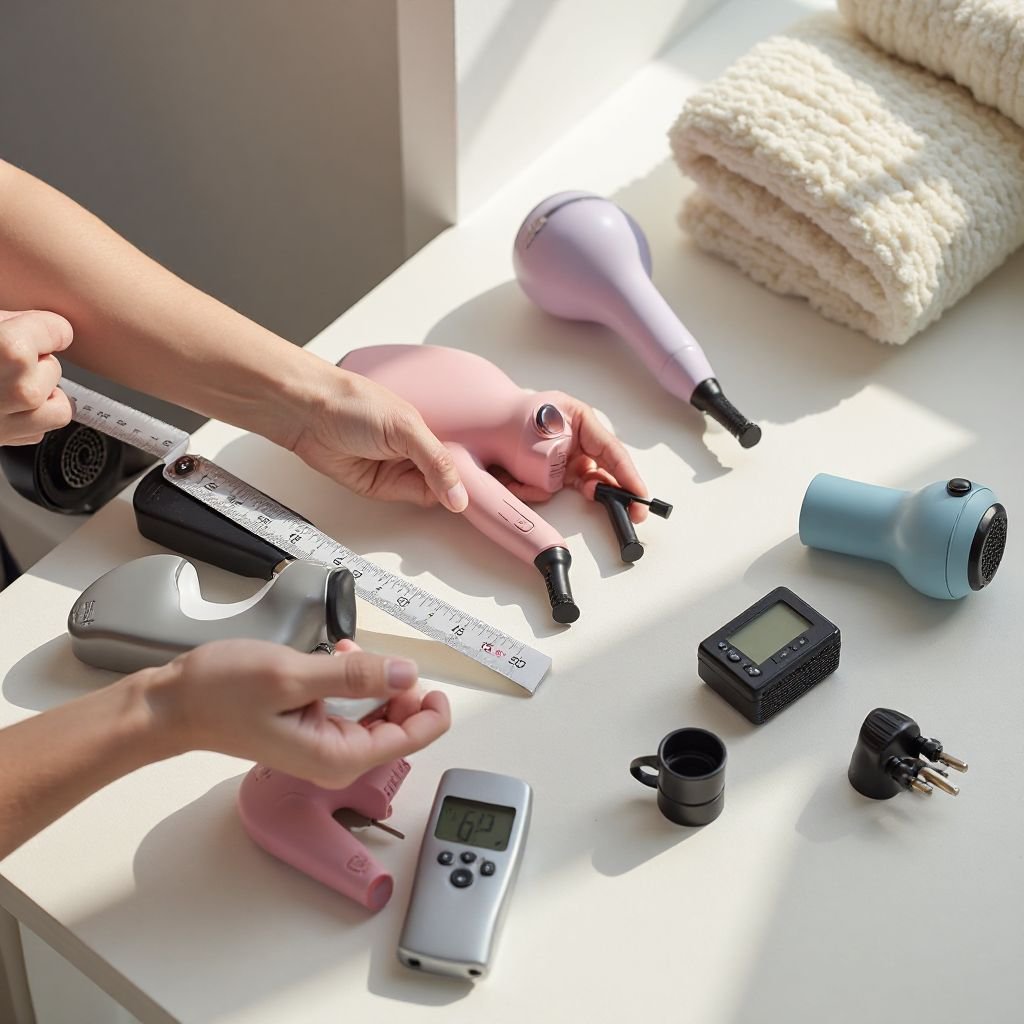
Specs needed: Direct dB measurement for all short-listed models. Confirm folded depth/width from the vendor or via visual measurement. If you own one, use a sound meter app and a tape measure for accurate reporting. Main sources: Glamour, brand spec sheets.
Price ranges in 2024 and price-to-performance realities
A budget “high-quality” travel dryer lands between $20 and $40, typically with switchable dual voltage, about 1200–1600W, and no frills. Premium models run $80–$200 and deliver noticeably faster drying, soft-touch plastics, quieter motors, and sometimes automatic voltage shifting or magnetic attachments. For medium-to-thick hair, spending more usually means less time under the heat and longer device life. For light seasonal use or fine hair, budget models suffice.
- Budget pick: Conair Travel Smart, $25–30 [source].
- Premium: T3 Afar ($150–180), ghd Flight+ ($150+), Drybar Baby Buttercup ($130) [source].
Three under-covered features competitors miss (and how to test them)
- Drying time benchmarks: Most lists never reveal actual dry times by hair density. To test: Towel-dry hair, set a timer from wet to touch-dry for thick and medium types. Expect 7–12 minutes with travel dryers, versus 4–7 for full-size at high power.
- Nozzle/attachment cross-compatibility: Try fitting your favorite diffuser or concentrator from home; most travel and home attachments are not interchangeable, so test before departure or buy travel-specific accessories. See also silk pillowcase hair tips for frizz management while away.
- Measured decibel levels and real bulk: Use a smartphone SPL app (measure at ear level, 6 inches away) to record loudness—if you share rooms, opt for 80 dB or below. For actual packed dimensions, fold the dryer and measure—never trust stock photos alone.
These hands-on tests expose subtle differences between “best travel blow dryer” claims and real-world results—especially for mid-length to thick hair types or frequent use.
Airline & TSA rules — what travelers must know for packing and use (2024)
According to the TSA, corded travel hair dryers are allowed in both carry-on and checked luggage with no stated power or size limits. Cordless or battery-powered mini hair dryer models require batteries to be accessible for inspection or removal. No airline permits use of any hair dryer aboard flights due to fire regulations. Always pack, do not use.
If traveling internationally, remember to bring region-appropriate plug adapters—but not voltage converters if your dryer is truly dual-voltage. Rules are consistent across US and international carriers.
Practical buyer’s checklist — how to pick the exact model for your trips
- Dual-voltage (100–240V): Non-negotiable for international use.
- Wattage 1200–1600W: Aim high if you have thick or long hair.
- Weight: Under 1 lb / 0.5 kg preferred for easy carry-on packing.
- Foldable handle: Crucial for packing efficiency.
- Attachments: Diffuser/concentrator as needed (curly or thick hair—see satin bonnet tips).
- Noise: Favor models with verified low decibel ratings.
- Plug/adaptor plan: Buy region-specific plug adapters before departure.
- Warranty/Return: Choose models with 1+ year coverage for trip security.
Scenario picks:
- Ultra-light commuter: BaBylissPRO Nano Titanium
- Business traveler, styling power: T3 Afar or ghd Flight+
- Budget/seasonal: Conair miniPRO or Travel Smart
For more on hair essentials that pack small, see our beauty tools review page.
Methodology, data limitations & sourcing notes (transparency)
Reliable segmented sales statistics for travel hair dryers are unavailable; one unverified report claimed a $2.14B global travel-dryer market in 2024 [source], but breakdowns for mini/foldable/dual-voltage are missing. Most weights, decibels, and folded sizes are from vendor websites or aggregate reviews. If you spot errors or want a model measured live, leave a comment and request specifics—we review and update as specs become independently verifiable. User review trends primarily sourced from Reddit threads and Amazon/YouTube user tests. For deep-dive hair care on-the-go, check our hair serum recommendations.
Quick FAQ
Do I really need a dual voltage hair dryer for international travel?
Yes—if you travel outside North America, a dual voltage hair dryer (supports 100–240V) is critical to avoid electrical failure. See “Dual voltage explained” above for details.
Can I pack a travel hair dryer in my carry-on, and will TSA allow it?
Yes, corded travel dryers are allowed in both carry-on and checked bags. Cordless versions may require battery inspection. See the “Airline & TSA rules” section for specifics.
Will a travel hair dryer damage my hair compared to my salon dryer?
Travel dryers with lower wattage (1200–1600W) may take longer and get hotter; use the concentrator and don’t blast roots up close. Consider packing a satin bonnet or leave-in conditioner (see our top bonnet picks) for extra protection.
What’s the difference between a mini hair dryer and a regular travel hair dryer?
Mini hair dryers typically have a smaller barrel, lower wattage, and reduced air flow—best for fine or short hair and infrequent use. Many regular travel models fold and offer more power but are still compact enough for most carry-ons.
How do I actually test the noise or drying speed of a travel dryer?
Use a phone stopwatch to time drying from towel-damp to styled, and a smartphone sound meter app at 6 inches distance to measure decibel level. Note findings for your hair type!